
Research Papers
Establishing technical credibility is essential for any climate risk company. Degree Day is an independent, objective, and data-driven firm. Our team has been engaged in climate risk research since 2011 and remains committed to advancing the state of the practice through ongoing research, peer-reviewed publications, and the application of emerging science.
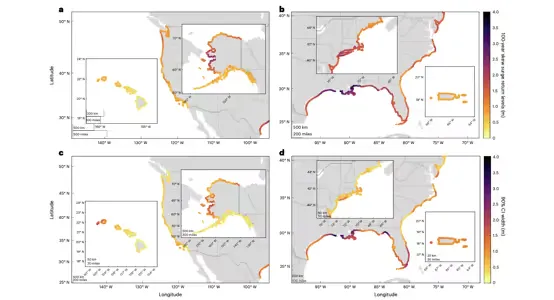
Observations reveal changing coastal storm extremes around the United States
Understanding extreme storm surge events that threaten low-lying coastal communities is key to effective flood mitigation/adaptation measures. However, observational estimates are sparse and highly uncertain along most coastal regions with a lack of observational evidence about long-term underlying trends and their contribution to overall extreme sea-level changes.
Nature Climate Change (2025)
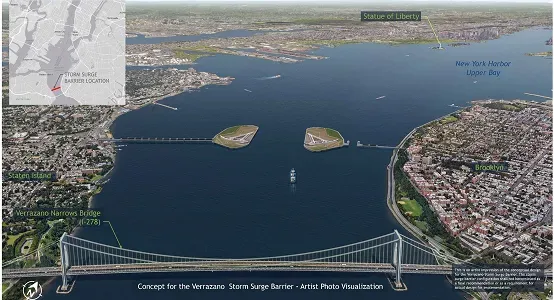
Coastal Flood Protection Megaprojects in an Era of Sea-Level Rise: Politically Feasible Strategies or Army Corps Fantasies?
Storm surge barriers, levees, and other coastal flood defense megaprojects are currently being proposed as strategies to protect several US cities against coastal storms and rising sea levels.
Journal of Water Resources Planning and Management (2023)
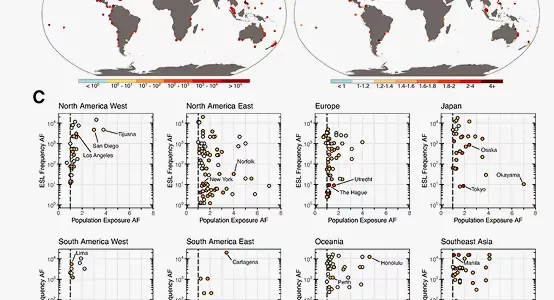
Popular Extreme Sea Level Metrics Can Better Communicate Impacts
Estimates of changes in the frequency or height of contemporary extreme sea levels (ESLs) under various climate change scenarios are often used by climate and sea level scientists to help communicate the physical basis for societal concern regarding sea level rise.
Climatic Change (2022)
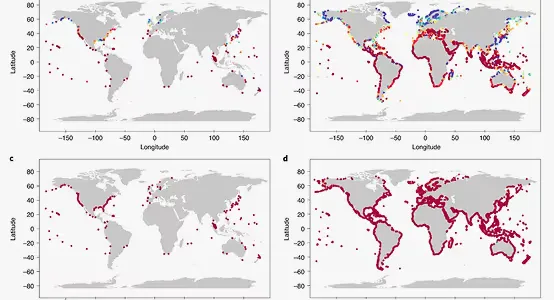
Extreme Sea Levels at Different Global Warming Levels
The Paris agreement focused global climate mitigation policy on limiting global warming to 1.5 or 2 °C above pre-industrial levels. Consequently, projections of hazards and risk are increasingly framed in terms of global warming levels rather than emission scenarios.
Nature Climate Change (2021)
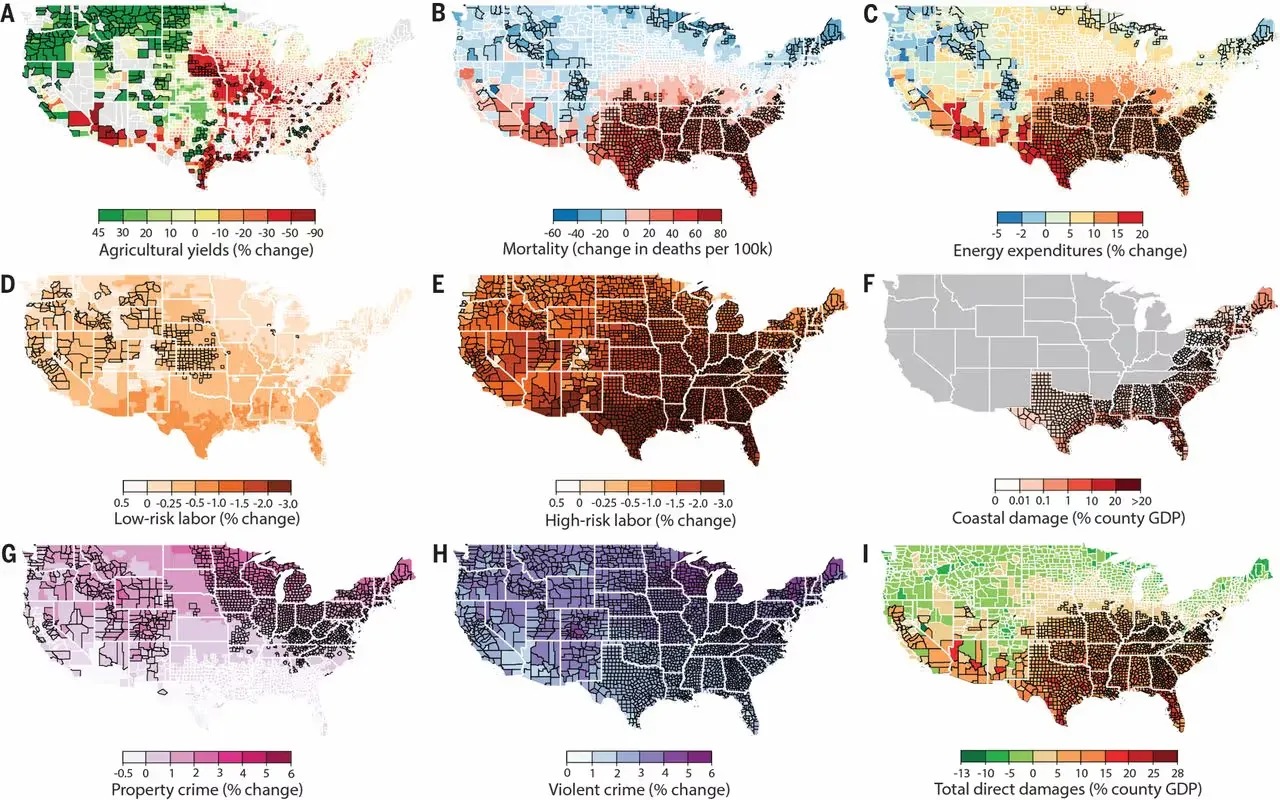
Estimating economic damage from climate change in the United States
Estimates of climate change damage are central to the design of climate policies. We develop a flexible architecture for computing damages that integrates climate science, econometric analyses, and process models. We use this approach to construct spatially explicit, probabilistic, and empirically derived estimates of economic damage in the United States from climate change.
Science (2017)
Economic Risks of Climate Change: An American Prospectus
Climate change threatens the economy of the United States in myriad ways, including increased flooding and storm damage, altered crop yields, lost labor productivity, higher crime, reshaped public-health patterns, and strained energy systems, among many other effects. Combining the latest climate models, state-of-the-art econometric research on human responses to climate, and cutting-edge private-sector risk-assessment tools.
Columbia University Press (2015)
The Political Complexity of Coastal Flood Risk Reduction: Lessons for Climate Adaptation Public Works in the U.S.
In this review, we highlight the role of interest mobilization, political leadership, stakeholder participation, and legal challenges as a result of environmental protection laws in both creating and overcoming political obstacles to the implementation of storm surge barriers, levees, and other coastal flood protection megaprojects.
Earth's Future (2021)
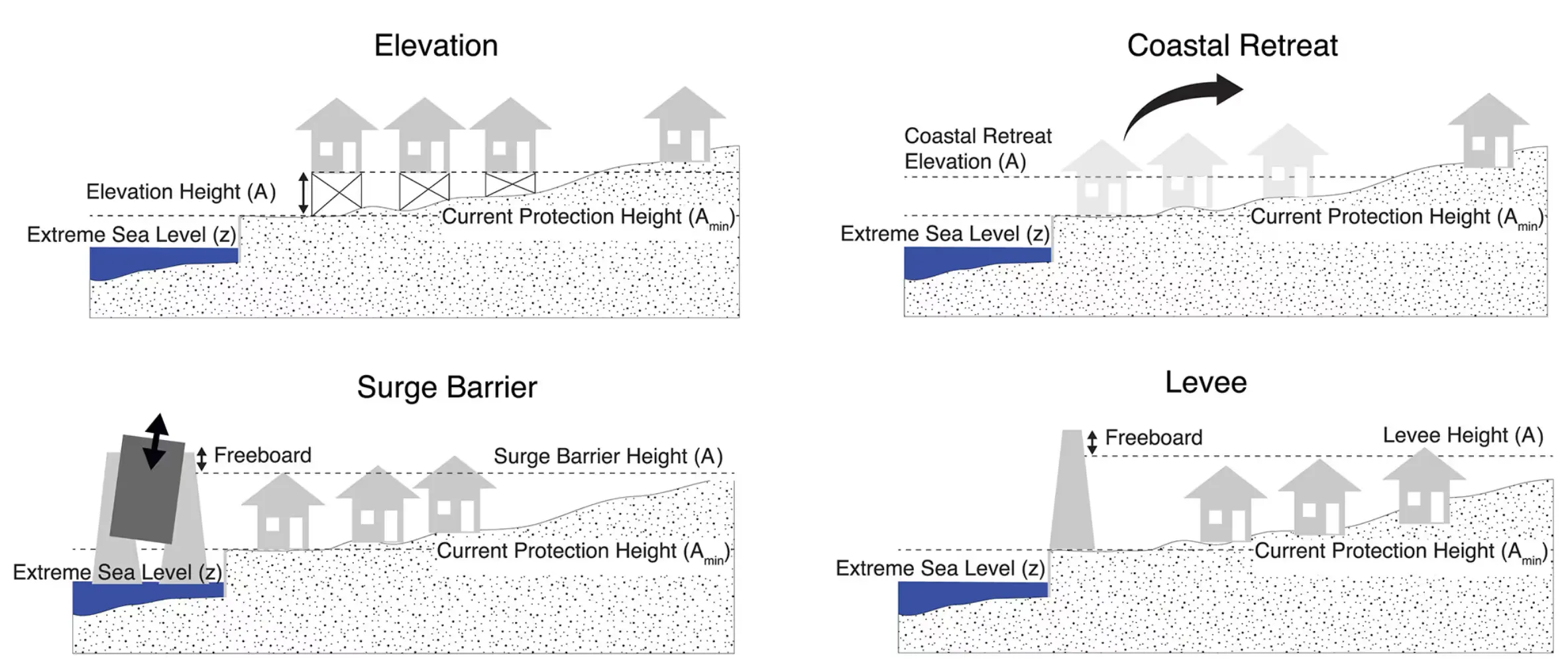
A Flood Damage Allowance Framework for Coastal Protection with Deep Uncertainty in Sea-Level Rise
Future projections of sea level rise are strongly dependent upon expert judgment about how much and how quickly Antarctica will melt. This uncertainty complicates any decisions regarding how high to build flood protections in order to reduce coastal flood damages from rising sea levels.
Earth's Future (2020)
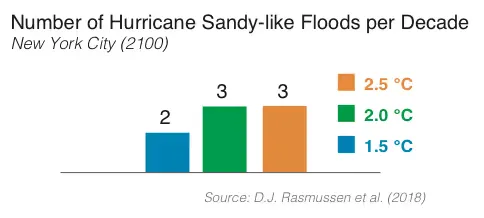
Extreme Sea Level Implications of 1.5 °C, 2.0 °C, and 2.5 °C Temperature Stabilization Targets in the 21st and 22nd Century
We employ probabilistic, localized sea-level rise projections and long-term hourly tide gauge records to estimate the expected frequencies of historical and future extreme sea levels for the 21st and 22nd centuries. By 2100, under 1.5 °C, 2.0 °C, and 2.5 °C stabilization, the median GMSL is projected to rise 48 cm (90% probability of 28–82 cm), 56 cm (28–96 cm), and 58 cm (37–93 cm), respectively.
Environmental Research Letters (2018)
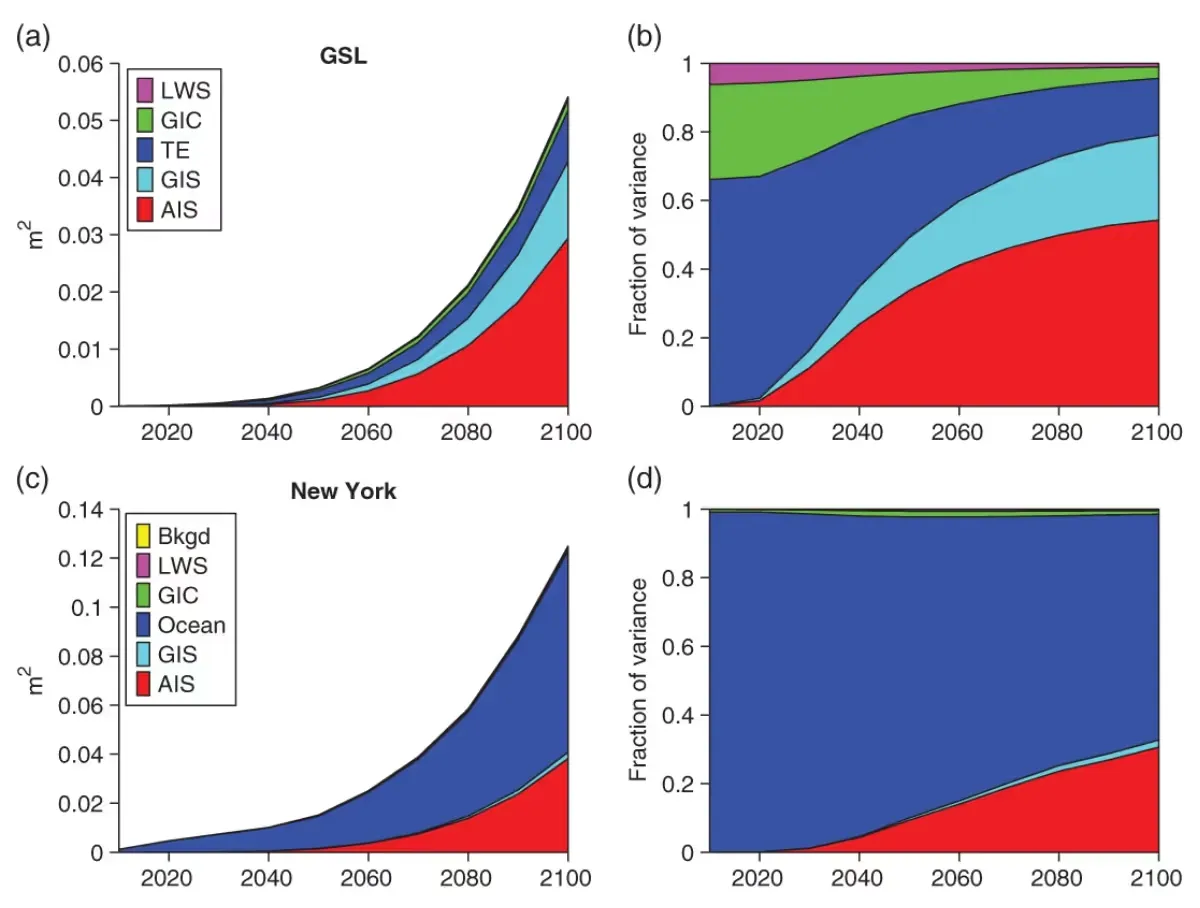
Probabilistic 21st and 22nd Century Sea-Level Projections at a Global Network of Tide-Gauge Sites
We present a global set of local sea-level projections to inform decisions on timescales ranging from the coming decades through the 22nd century. We provide complete probability distributions, informed by a combination of expert community assessment, expert elicitation, and process modeling.
Earth's Future (2014)
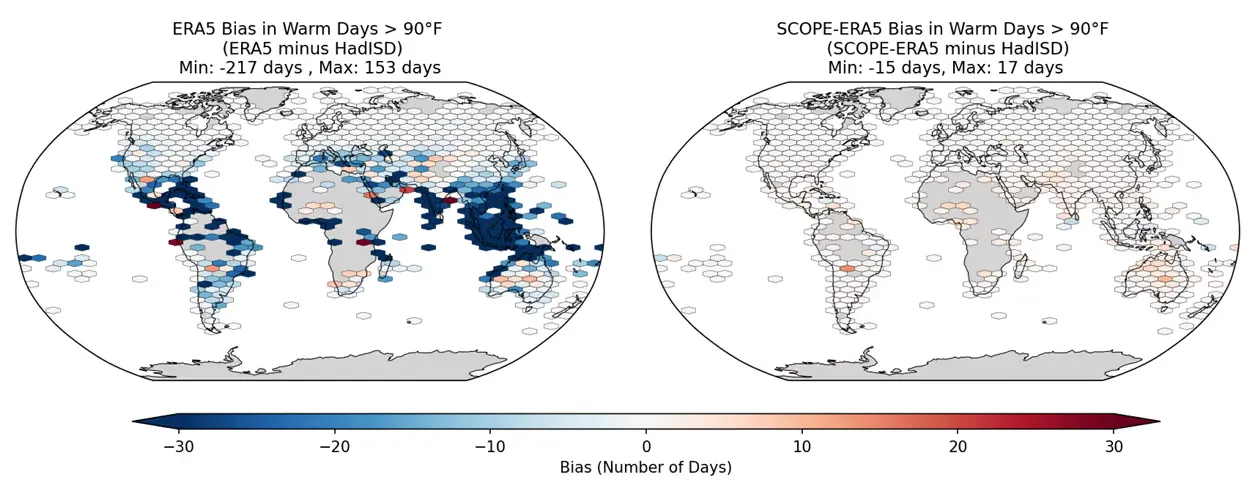
Multivariate Bias Correction of ERA5 Using in-situ Observations for Planning and Engineering
SCOPE-ERA5 (Station-Calibrated Outputs for Planning & Engineering) is a post-processed version of ERA5 daily data at 7,115 global weather stations (1979-2024). Both marginal distributions and inter-variable dependence are adjusted to produce physically consistent time series of temperature, humidity, surface pressure, and wind speed.
Environmental Research: Climate (2026)
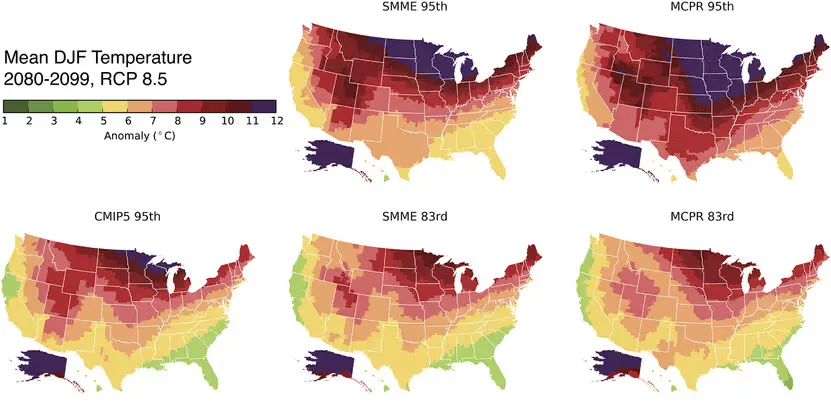
Probability-Weighted Ensembles of U.S. County-Level Climate Projections for Climate Risk Analysis
Quantitative assessment of climate change risk requires a method for constructing probabilistic time series of changes in physical climate parameters. Here, two such methods are developed and then are applied to construct joint probability density functions of temperature and precipitation change over the twenty-first century for every county in the United States.
Journal of Applied Meteorology and Climatology (2016)
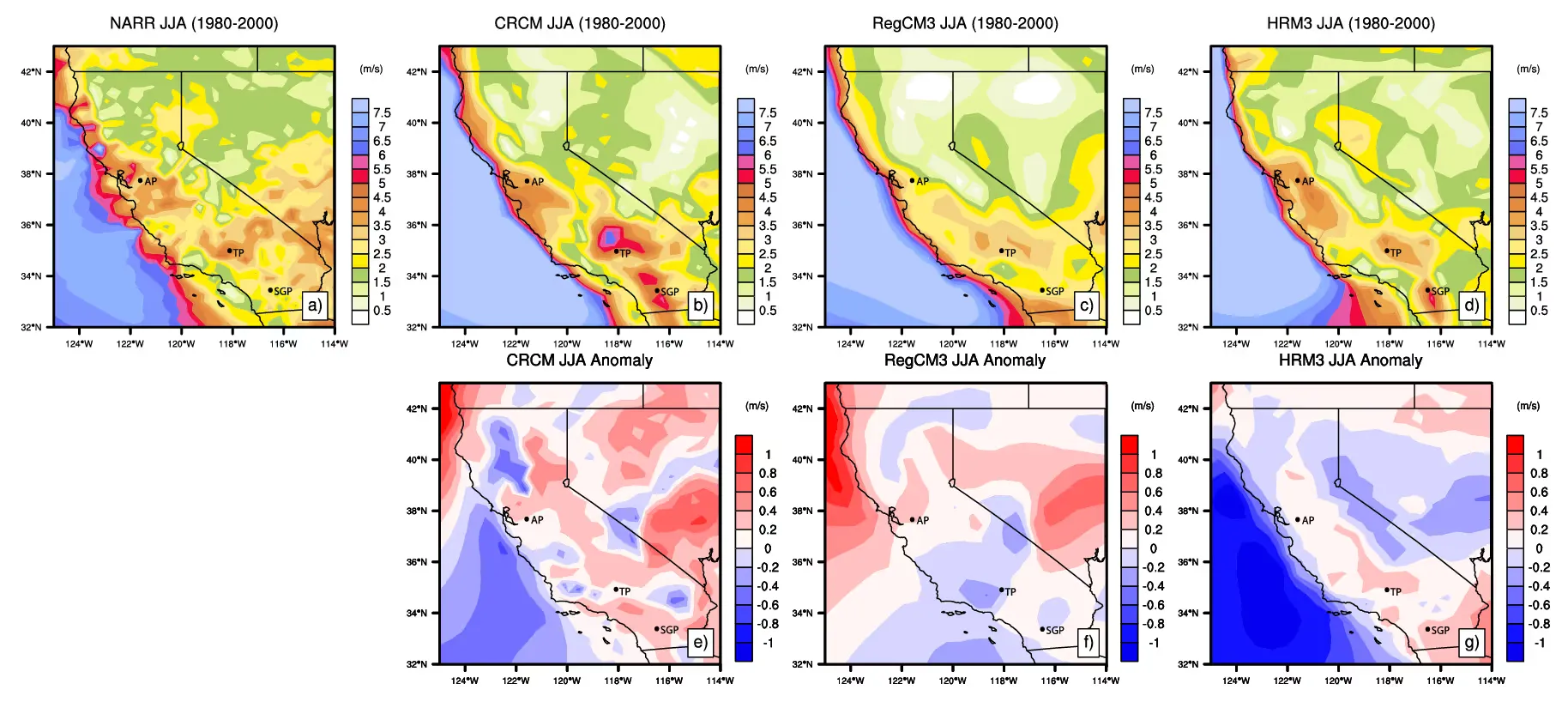
Opportunities and challenges in assessing climate change impacts on wind energy — a critical comparison of windspeed projections in California
We employ the North American Regional Climate Change Assessment Program (NARCCAP) regional climate model data to estimate changes in 10-meter wind speeds expected to occur in the mid-21st century at three wind farm regions: Altamont Pass, San Gorgonio Pass, and Tehachapi Pass.
Environmental Research Letters (2011)
